
So you’ve got your chilled base in the machine and it’s spinning. Now, you’re probably wondering how long to churn ice cream before it’s actually done. Too little churning time, and you’ve got soup. Too much, and you’ve got something closer to butter. Here’s how to nail the timing, whether you’re running a compressor ice cream maker or a bowl freeze one.
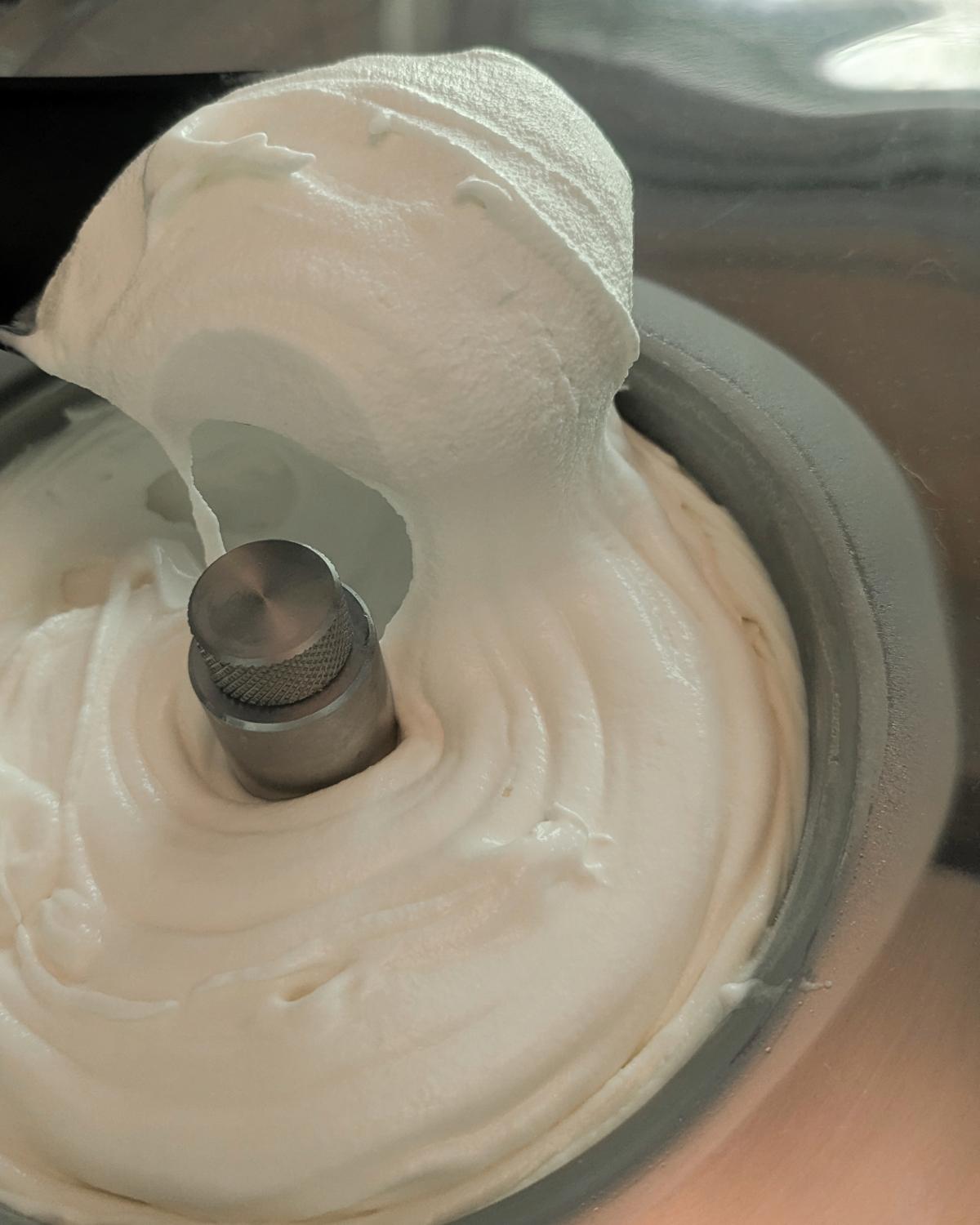
Most ice cream takes 15–40 minutes to churn, but the real signal to stop is texture and temperature, not the clock.
Can You Over-Churn Ice Cream?
It feels counterintuitive: more churning should mean smoother homemade ice cream, right? But it’s actually the opposite. Once your base hits the soft-serve stage, every extra minute in the ice cream maker works against you in several ways:
- Ice Crystal Formation: As your machine runs, it continuously scrapes frozen crystals off the walls of the bowl. Ideally, you want these crystals to be as small as possible. If you let the machine run past the optimal point, those tiny crystals collide and grow larger. Worse yet, as the friction of the blades generates minute amounts of heat, the smallest crystals melt away and refreeze onto the larger crystals, giving your ice cream an icy texture.
- Butterfat Leaving Suspension: Ice cream is an emulsion of fat suspended in a water-sugar liquid. The paddle in your ice cream maker is constantly shearing and beating air into this emulsion. If you leave it spinning too long, the physical agitation becomes too aggressive for the fat globules. They smash into each other, break through their protective membranes, and coalesce (a process very similar to how cream turns into butter). Instead of a smooth, uniform emulsion, your base separates, leaving a greasy film on your tongue when you taste it.
The fix is simple: stop the machine based on texture and temperature, not the clock. That’s really the whole answer to how long to churn ice cream. It’s less a fixed number of minutes and more a moment you learn to recognize with practice.
Trust Draw Temperature Over the Clock
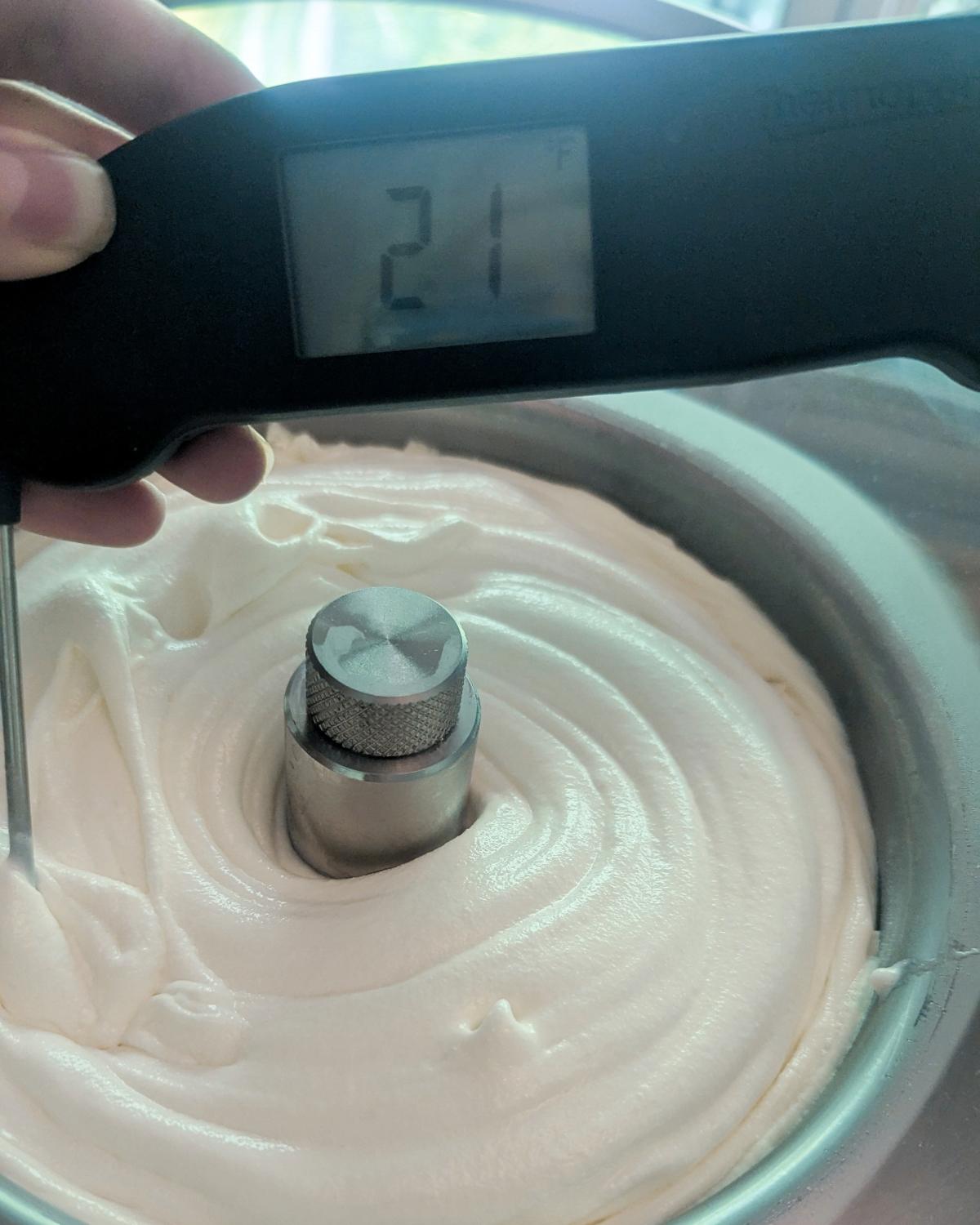
Most home ice cream makers are ready to stop churning somewhere around 21°F, the point at which roughly half the water in your base has frozen into ice crystals. That’s the “draw temperature,” the point where you pull, or draw, the ice cream out of the machine.
You don’t need an instant-read thermometer to know how long to churn ice cream (though it doesn’t hurt). The more practical cues include:
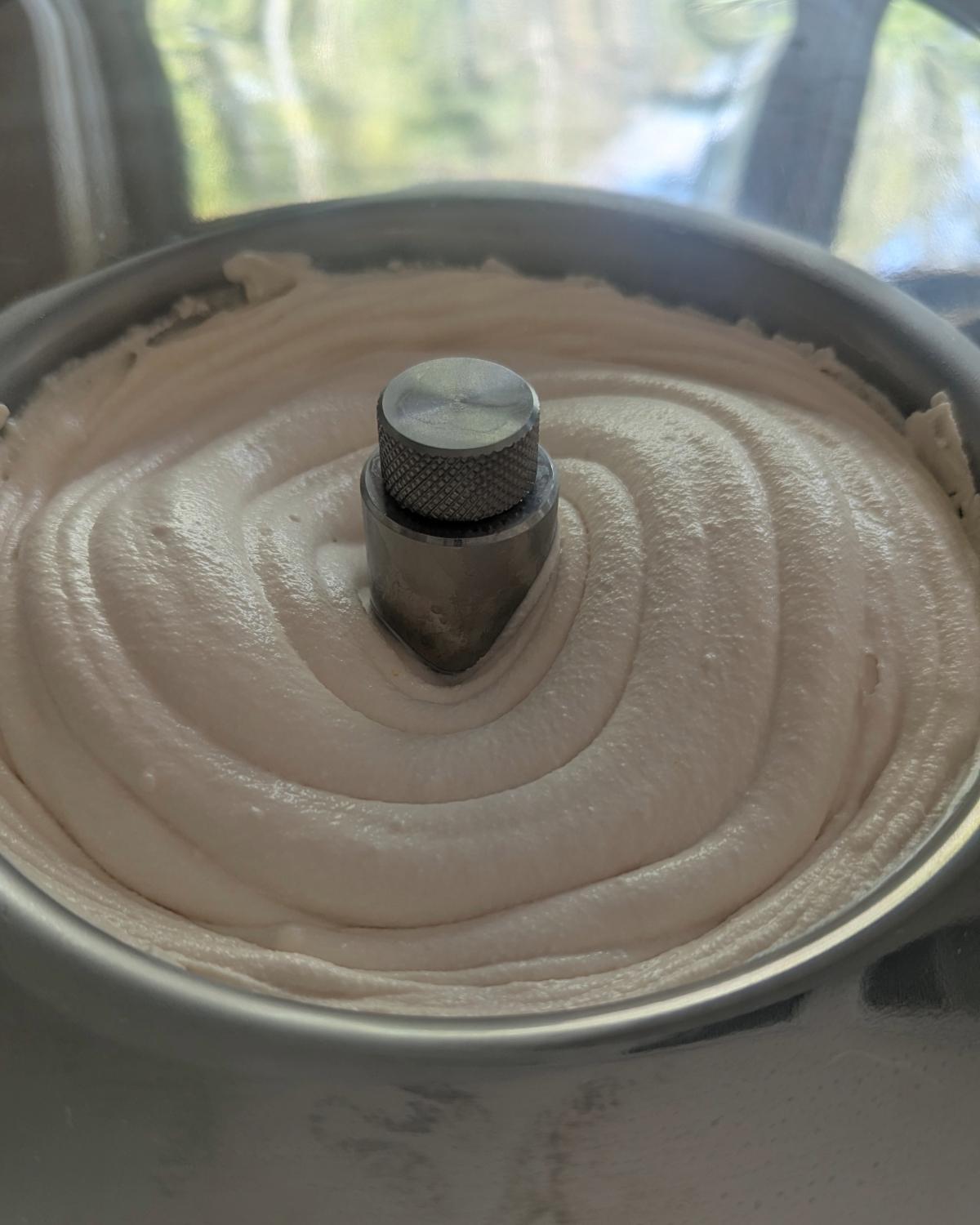
- Texture: It should look and move like soft-serve (thick, holding a swirl, but still scoopable with a spatula).
- Separation: Instead of clinging and spinning with the bowl, the mixture starts pulling away from the sides of the bowl.
- Sound: As the base thickens, the machine’s motor tone changes. The dasher works harder and sounds more labored.
Churning time is a rough guide at best. Depending on your ice cream maker, ambient kitchen temperature, and how cold your base was going in, this can take anywhere from 15–40 minutes. Use the time as a guide for when start checking the texture, not when to stop churning altogether.
Ice Cream Shouldn’t Be Fully Hardened Coming Out of the Machine
This trips up a lot of first-timers. The ice cream maker’s job is to get you to soft-serve consistency, not to a scoopable pint. The real hardening happens afterward in the freezer. If you keep the ice cream maker running while you wait for it to firm up like store-bought ice cream, you’ll end up with big chunks of ice and fat globules.
Once your base is at soft-serve consistency, transfer it to an airtight container, and press a layer of plastic wrap or parchment directly onto the surface to cut down on ice crystals. Freeze for at least four hours (or overnight) to let it firm up properly.
Churn Consistency: Compressor vs. Bowl Freeze Machines
Here’s a bit on how long to churn ice cream in each type of machine:
- Bowl freeze machines (the kind with a pre-frozen insert) rely entirely on how cold that bowl got beforehand. They churn a single batch, then the bowl needs to re-freeze (usually for 24 hours) before the next one. Churn times tend to run 20–30 minutes, and they’re more sensitive to a base that wasn’t cold enough going in.
- Compressor machines have a built-in freezing unit, so they can pull heat out of the base faster and more consistently, and you can run back-to-back batches. They often reach draw temperature a little quicker and more predictably, but the same rule applies: watch for texture, not time.
Whichever you’re using, don’t rely on the manufacturer’s stated time as law. Treat it as a starting point for when to start checking. For example, as I’ve gotten to know my Lello, I set the timer for 30 minutes, but start checking as soon as I hear the motor slow down. This is a reliable method for me.
Don’t Overfill the Bowl
As it churns, your base is doing more than just freezing. It’s also incorporating air (called overrun, which affects both texture and yield). That means the volume of base in the bowl will expand as it churns. Fill the canister no more than about three-quarters full. If you overfill it, the expanding mixture will leak out the top, making a sticky mess all over your machine.
When to Add Mix-Ins While Churning
Timing your mix-ins matters just as much as timing the churn itself. But when to add them depends on the type of mix-ins. As a rule of thumb: if it’s hard and small, the machine can handle it near the end. If it’s soft, wet, or meant to stay a ribbon rather than a mix-in, save it for the fold-in after churning.
Small, Sturdy Pieces
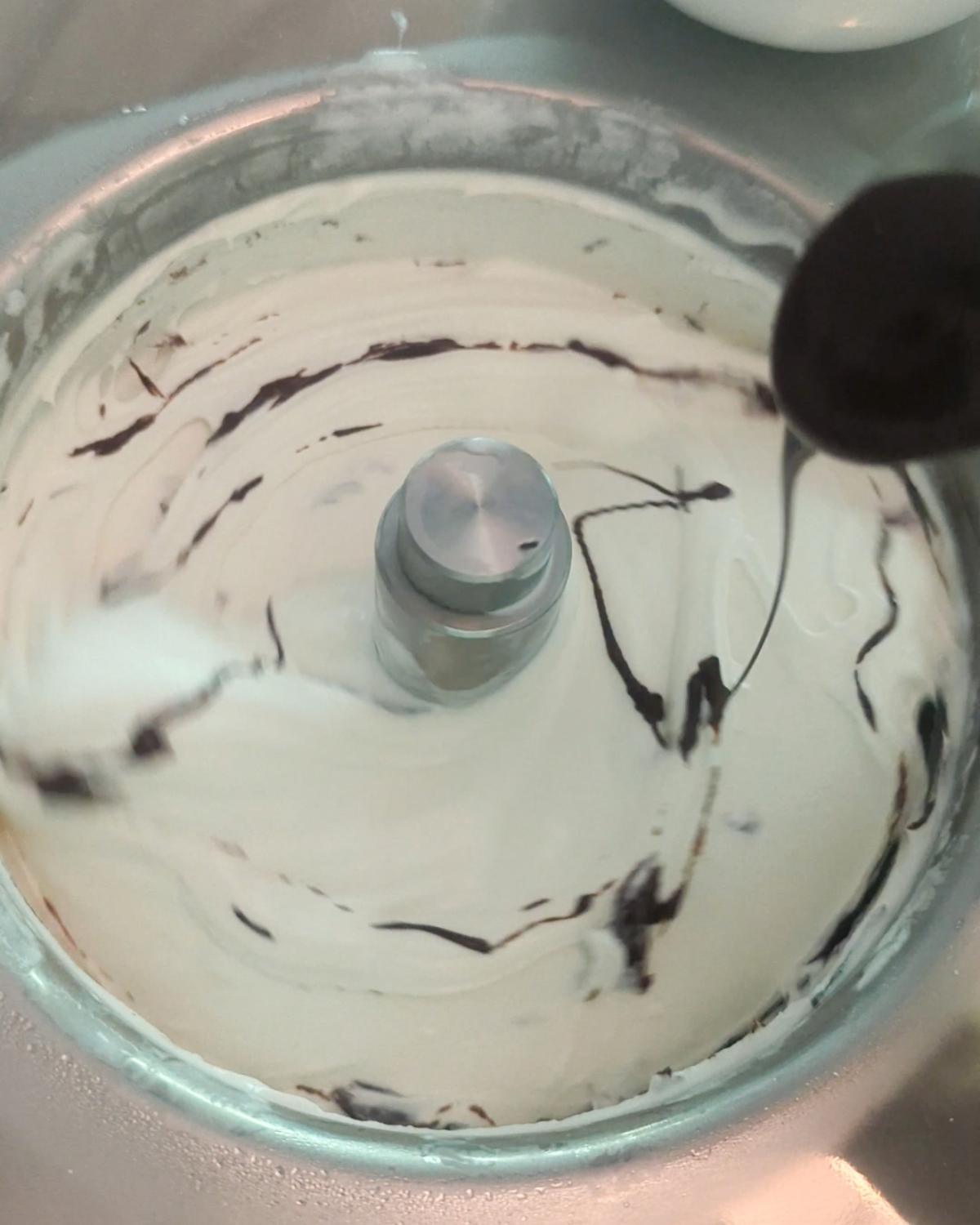
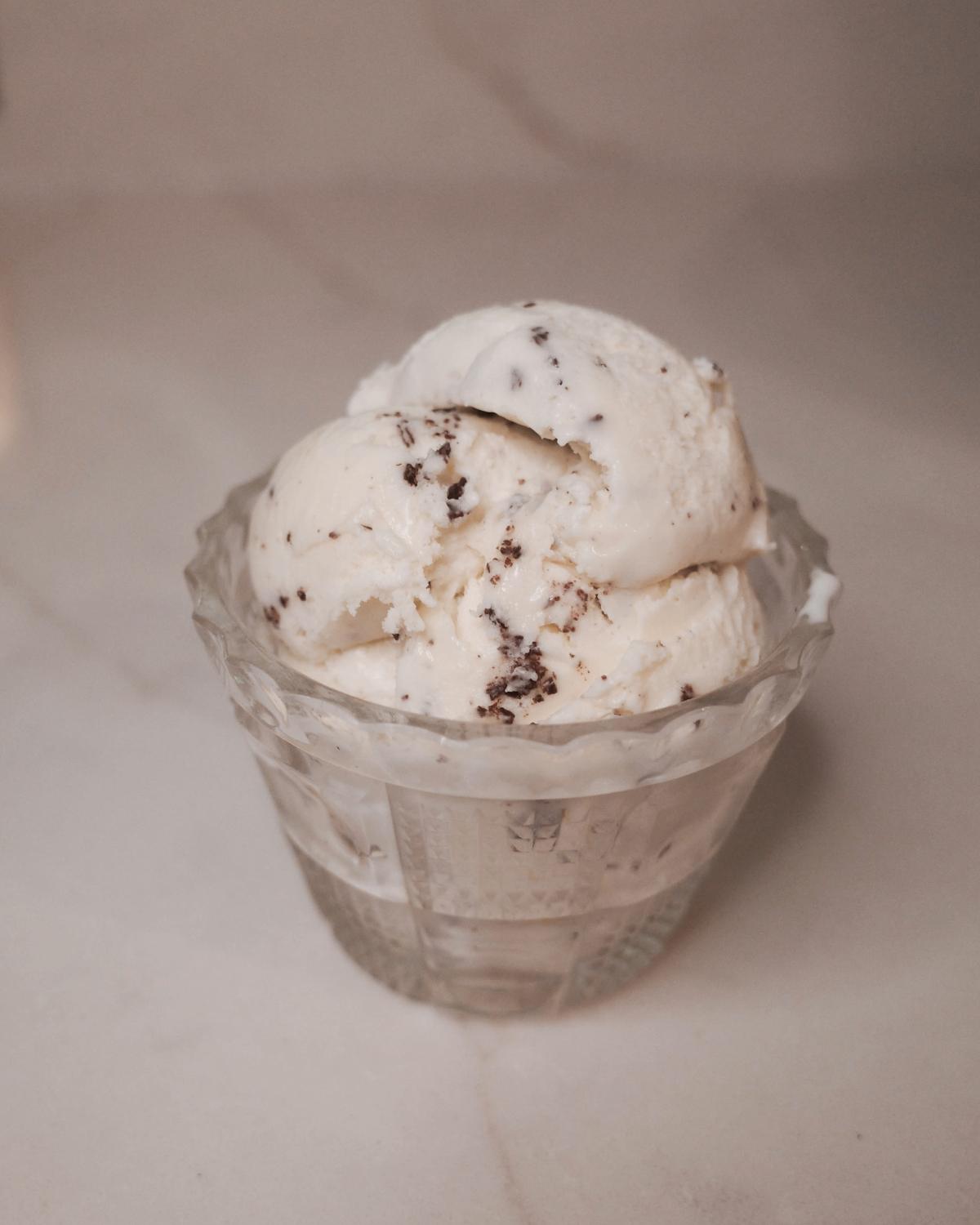
Things like chocolate chips, chopped chocolate, mini candies, toffee bits, chopped nuts, and cookie crumbs should be added directly to the machine in the last 1-2 minutes of churning. Anything that’s firm enough to survive a brief spin without breaking down works well here, as the machine will distribute it evenly. This is also the time when I add melted chocolate to create stracciatella.
Anything Wet, Delicate, or Prone to Bleeding Color/Moisture
Tings like fruit swirls, caramel or fudge ripples, jams, fresh soft fruit, sprinkles, or brownie chunks should be folded in by hand when transferring to your storage container. Folding these in after churning keeps swirls intact (the dasher would otherwise blend them into the base and muddy the color/flavor) and avoids adding extra churn time chasing an even mix-in distribution, which risks over-churning your base in the process.
Cheat Sheet: How Long to Churn Ice Cream
However long your particular batch takes, the answer to how long to churn ice cream always comes back to the same cue: stop at soft-serve, not before and not after.
How Long to Churn Ice Cream
- Judge doneness by machine sound, base texture, and temperature (around 21°F), not by a fixed timer.
- Stop at soft-serve consistency; the freezer finishes the job.
- Compressor ice cream makers churn a bit faster and more consistently than bowl machines, but the same doneness cues apply to both.
- Fill the bowl no more than three-quarters full to leave room for overrun.
- Hard, small mix-ins go in during the last minute or two of churning; soft, wet, or swirl-style mix-ins get folded in by hand after churning.
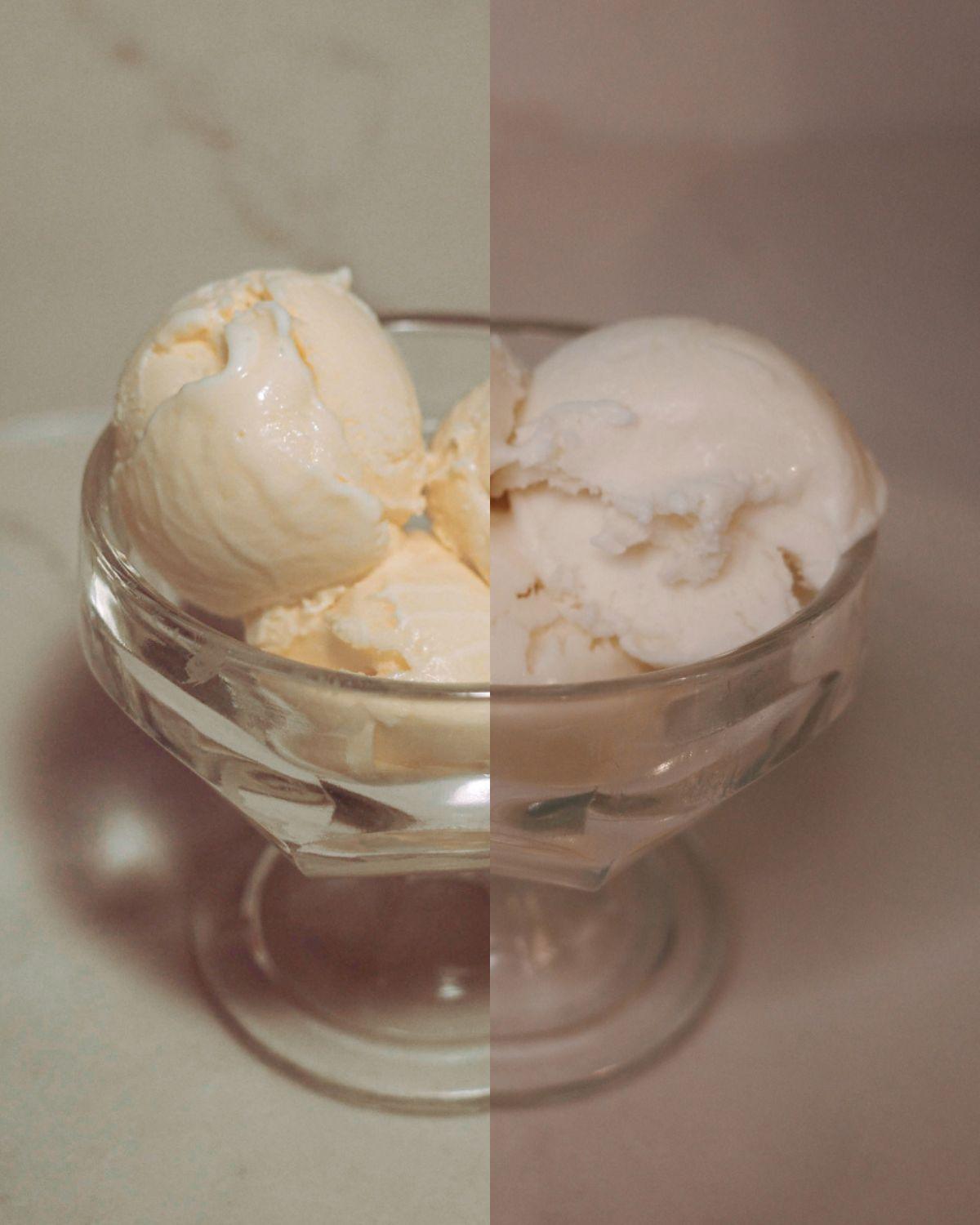

The trick we have discovered is to start with the base mixture *really* cold. We move it from the refrigerator to the freezer about an hour before churning, checking periodically and stirring in any parts that have started to thicken around the edges. If the sugar content is high enough, it remains liquid well below the freezing point.
We then immediately pour this into the ice cream maker (a bowl freeze machine left 24 hours in the freezer at its lowest setting) and churn. By this method, churning takes only 10-12 minutes and results are excellent!